
Why Is Your Upstairs So Hot? Save Money and Improve Home Comfort
If your upstairs feels like a sauna every summer while the first floor stays comfortable, you’re not alone. Many homeowners across Delaware struggle with uneven temperatures between floors, especially during the hottest months of the year.
You turn down the thermostat, your air conditioner runs nonstop, and yet the bedrooms upstairs remain warm and uncomfortable. While many people immediately blame their HVAC system, the real cause is often a combination of factors that affect how heat moves through your home. Proper attic ventilation, insulation, windows, and air sealing all play an important role in maintaining indoor comfort.
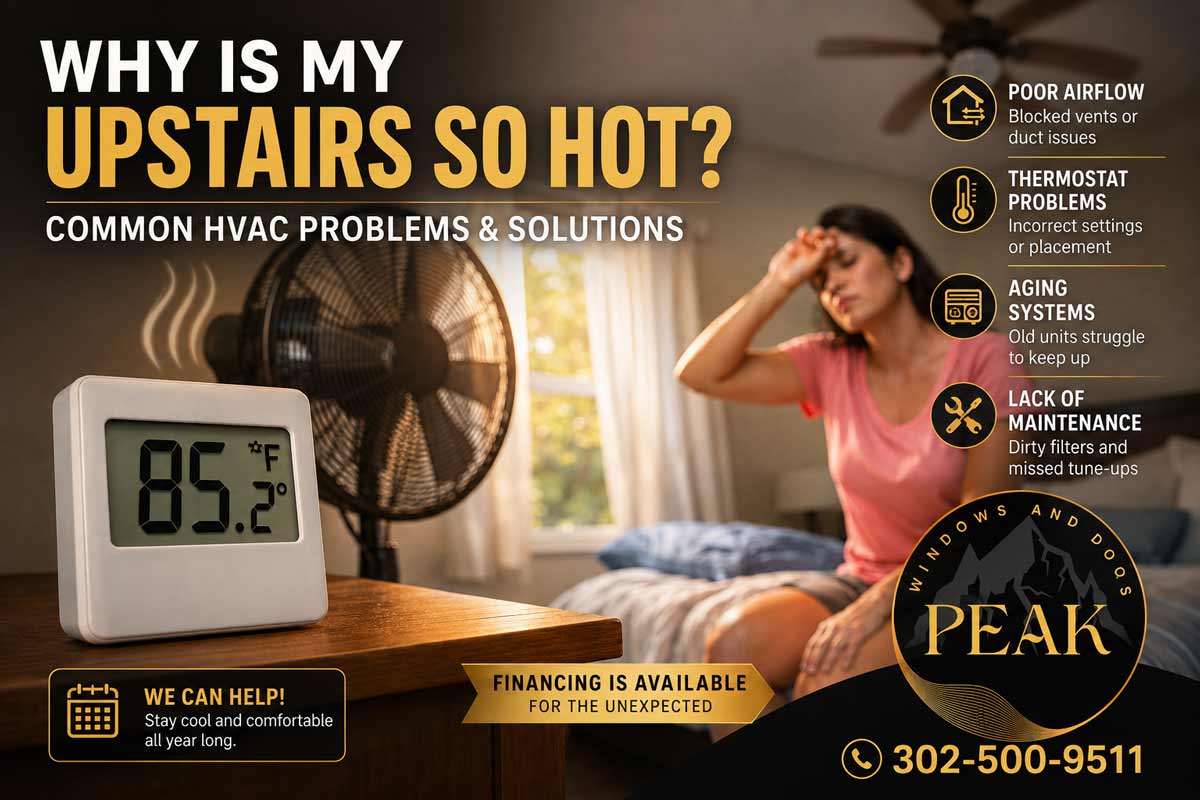
Why Does Heat Collect Upstairs?
The simple answer is that heat rises. Since your second floor sits directly below the attic, it naturally absorbs more heat than the lower levels of your home.
During the summer, your roof absorbs sunlight throughout the day. This heat transfers into the attic, where temperatures can climb significantly higher than the outdoor temperature. When that hot air becomes trapped, it can impact the rooms below and make your upstairs feel much warmer than the rest of the house.
The Important Role of Your Attic
Your attic is designed to act as a buffer between the roof and your living space. When it’s functioning properly, attic ventilation allows fresh air to enter through intake vents while hot air escapes through exhaust vents near the roof peak.
Effective attic ventilation helps:
- Reduce excessive attic heat
- Minimize moisture buildup
- Support energy efficiency
- Extend the life of roofing materials
- Improve overall home comfort
When ventilation is inadequate, heat and moisture can accumulate, creating conditions that make cooling your home much more difficult.
Other Common Reasons Your Upstairs Is Hot
While attic ventilation often contributes to temperature problems, it is rarely the only culprit. Several factors may be working together.
Insufficient Insulation
Insulation helps slow the transfer of heat from your attic into your living space. Older homes throughout Delaware often have insulation levels that no longer meet modern standards. If your insulation has settled, deteriorated, or is insufficient, heat can easily move into upstairs rooms.
Aging or Inefficient Windows
Older windows can allow significant solar heat gain, particularly on south- and west-facing sides of the home. Single-pane windows, damaged seals, and outdated frames may allow heat to enter while making it harder to maintain consistent indoor temperatures.
At Peak Windows & Doors, we frequently find that upgrading to energy-efficient replacement windows helps homeowners improve comfort while reducing strain on their cooling systems.
Air Leaks
Small gaps around windows, doors, attic access points, and ductwork allow conditioned air to escape and hot outdoor air to enter. These hidden leaks can significantly affect second-floor temperatures.
HVAC Distribution Issues
Sometimes the problem isn’t your air conditioner but how the cool air is distributed. Restricted ducts, balancing issues, or inadequate airflow to upstairs rooms can leave those spaces feeling warmer even when the system is operating correctly.
Signs Your Home May Have a Heat Management Problem
You may benefit from a professional evaluation if you notice:
- Upstairs bedrooms that are consistently hotter than downstairs rooms
- An air conditioner that runs continuously during summer
- High energy bills
- Excessive attic temperatures
- Uneven airflow between floors
- Drafty or aging windows
- Moisture or mold in the attic
- These symptoms often indicate that multiple components of your home’s building envelope need attention.
- How Energy-Efficient Windows Can Help
Many homeowners are surprised to learn how much impact their windows have on indoor comfort.
Modern replacement windows feature:
- Low-E glass coatings
- Multi-pane construction
- Improved insulation performance
- Better weather sealing
- Reduced solar heat gain
These features help keep unwanted heat outside while allowing your HVAC system to operate more efficiently. When combined with proper attic ventilation and insulation, new windows can significantly improve comfort throughout your home.
Solutions for Delaware Homeowners
If your upstairs is always warmer than the rest of your home, start by looking at the whole picture rather than focusing on a single issue.
Consider having the following evaluated:
- Attic ventilation
- Insulation levels
- Air sealing
- Window performance
- HVAC airflow and balancing
A comprehensive approach often delivers the best results for long-term comfort and energy efficiency.
Stay Comfortable with Peak Windows & Doors
At Peak Windows & Doors, we help Delaware homeowners improve comfort, energy efficiency, and home performance with high-quality replacement windows and doors. If your upstairs feels too hot, your windows may be contributing more than you realize.
Our team can evaluate your current windows and recommend energy-efficient solutions designed to keep your home more comfortable year-round.
Ready to improve your home’s comfort? Contact Peak Windows & Doors today for a free consultation and discover how new windows can help you beat the Delaware heat.

Plan for a Smooth Winter: 5 Things to Do Before Winter Arrives
Winter may still feel like it’s a ways off, but now is the time to prepare your home…